On the History and Impact of Usenet and the Internet
On the History and Impact of Usenet and the Internet
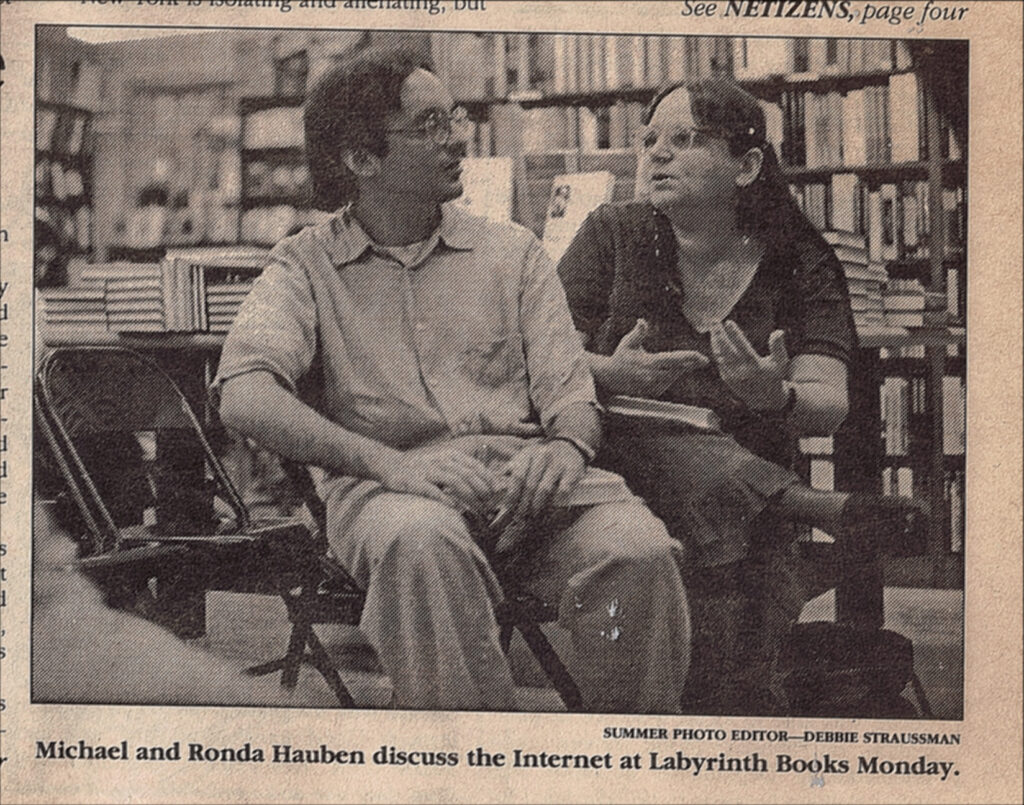
“Netizens: On the History and Impact of Usenet and the Internet” was written and published online for free in January 1994 by Michael Hauben and Ronda Hauben. It documents and analyzes the early internet and describes the rise of a new form of net based citizenship (termed Netizenship).
“Welcome to the 21st Century. You are a Netizen (a Net Citizen) and you exist as a citizen of the world thanks to the global connectivity that the Net makes possible. You consider everyone as your compatriot. You physically live in one country but you are in contact with much of the world via the global computer network. Virtually, you live next door to every other single Netizen in the world. Geographical separation is replaced by existence in the same virtual space.”
Michael Hauben wrote those words in 1993, as an indication of the potential of a better future made possible by the new and growing internet.
The internet by the early 1990’s consisted of the interconnection of research, academic, government and other computer networks. It was public and non-commercial, having been built with scientific and educational funding. Among the early contributors to the net were hobbyist bulletin board systems (BBSs) – decentralized forums that only supported text based communication and many relied on dial up connections. Corporate America was working with elements of the U.S. Government to privatize and commercialize the net.
“Netizens: On the History and Impact of Usenet and the Internet” provides a window into the growing community and culture of the early internet. Throughout the book there are quotes from real conversations with Netizens of the 1990’s. The book also puts the creation of the internet into a valuable historical context, detailing the pioneering vision that gave birth to the Internet, and comparing this advance in technology to that of the advent of the printing press.
In “Netizens” Michael Hauben looked forward to the potential impact that the Net and Netizens would have on politics, journalism, governance, and many other aspects of peoples’ lives. Michael Hauben recognized that the collaborative contributions for a new media would far exceed what the old media had achieved. “As people continue to connect to Usenet and other discussion forums,” he wrote, “the collective population will contribute back to the human community this new form of news.
Today in a world unquestionably and profoundly shaped by the power of the internet, “Netizens” is a crucial document that reminds us that networked computing is at its core a deeply social and democratic technological marvel which – when used by responsible, engaged, inquisitive netizens – can enable humanity to take on our world’s problems together.
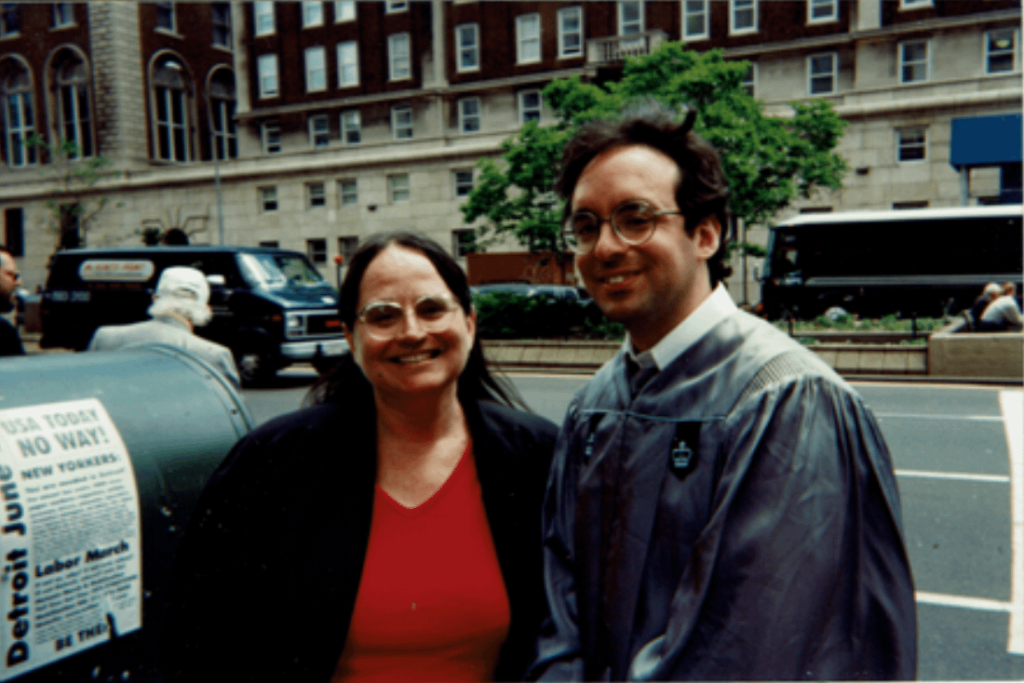

Michael took an interest in electronic devices at a young age. In his teenage years, Michael was active on BBSs in the Detroit area, posting under the name Wizkid (later changed to Sentinel). He was a founding member of the Amateur Computerist newsletter in 1987 “covering computers, the internet, netizens and the world they are imbedded in.” (1)
Michael attended Columbia University, earning a BA in Computer Science (1995) and an MA in Communication (1997). In 1993, while taking a computer ethics course, Michael began formally researching the impact of the internet on peoples’ lives, culminating in an article “The Net and Netizens” which started the journey of writing the full book with his co-author over the next 3 years.
Michael also loved music, He was a DJ at WBAR: Barnard College Radio, and he and a colleague developed one of the first online music listing sites “the Ever Expanding Web Music Listing.”
Tragically Michael passed away in 2001, but his work and legacy live on.
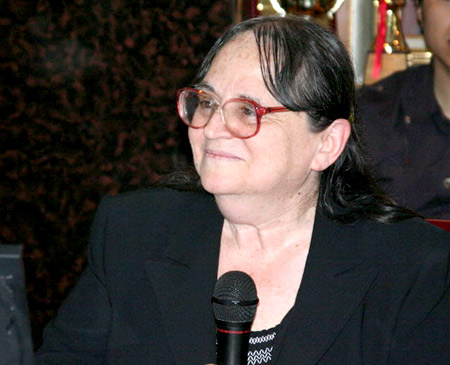
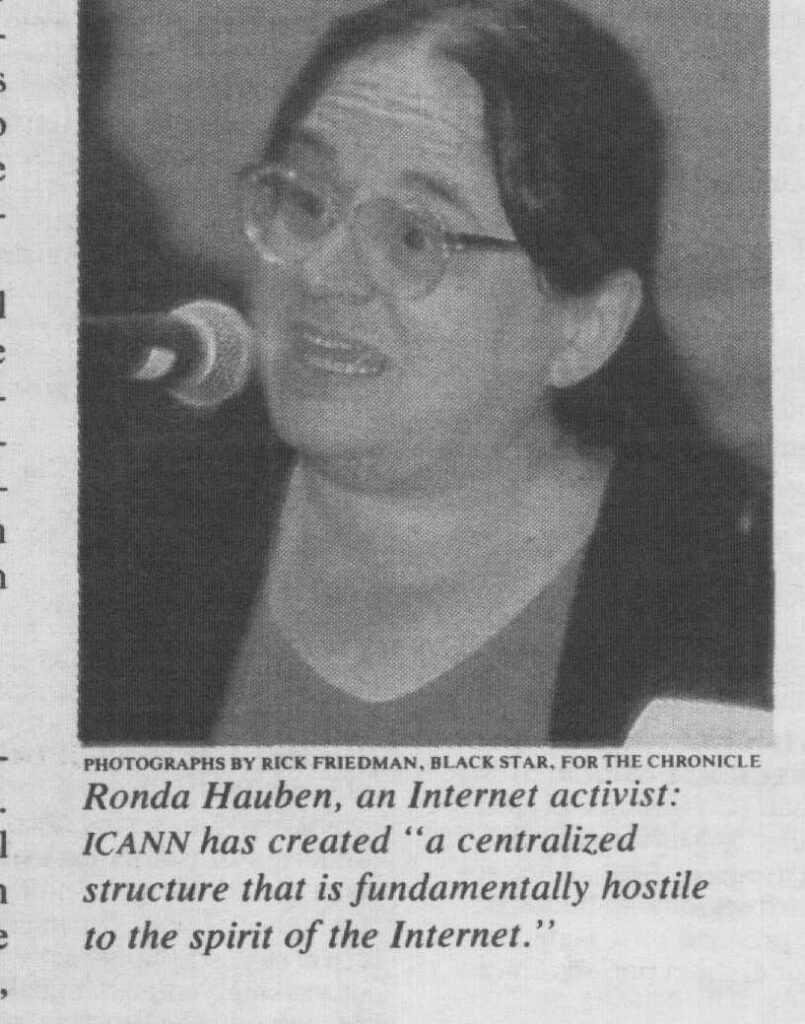
Ronda Hauben holds an MA degree from Tufts University and is a founding editor of the Amateur Computerist Newsletter. Her research interests include the history of the science and technology of the Internet, the role of government and governance structures in the creation of the Internet, the emergence and social impact of the Net and Netizens.
In the 1980s, Ronda researched the 1936-1937 Flint Sit-Down Strike, finding and interviewing some of the surviving sit-down pioneers, especially poet Floyd Hoke-Miller, cartoonist “Doc” Wilson, and Kenny Malone. She produced a series of books about the sit-down strike and the accomplishments of the sit-downers after their victory, notably “The Story of the Searchlight,” “The Voice of the Chevrolet Worker” published by the Spirit of ’37 Press, and “A Laborer Looks at Life: Then and Now” (1984).
After teaching computer programming at the Ford Motor Company River Rouge Complex, Ronda participated in the founding meetings of the Amateur Computerist in 1987. She has been an editor and the major contributor to its over 30 years of continuous publication. Ronda is co-author of this book, Ronda wrote in the Introduction, “A new millennium is approaching.” In this “new era, computers and people around the world are interconnecting and interacting in a manner that is unprecedented.”
Ronda has been a major defender and propagator of the importance of the concept of netizen and the contribution world-wide of netizens in every society.
She has given invited talks in Europe, North America, Africa, China and the Republic of Korea. Her presentations and talks include, “;The United Nations, China and Journalism in the Era of the Netizen,” at the Chinese Academy of Social Science (CASS) in Beijing, “In Honor of the Netizens” at the First Netizen Celebration Day held by the Internet Society of China, “The Internet Model of Socio-Economic Development and the Emergence of the Netizen,”; at the Association for Heterodox Economics (AHE) conference in Bordeaux, France, “The International and Scientific Origins of the Internet and the Emergence of the Netizens,” at the 22nd International Congress on the History of Science in Beijing, and “;The Internet: An International Public Treasure: A Proposal”; for the US. Department of Commerce, 1998.
Ronda was a journalist for Hysteria, Teleopolis, Tageszeitung and OhmyNews International. Her journalism includes covering the United Nations and UN related issues, 2006 to 2020, first for OhmyNews International and her netizenblog at taz.de, the online website for Die Tageszeitung newspaper. In 2008 she was the recipient of the Silver, Elizabeth Neuffer Memorial Prize for Excellence in Journalism in written media (including online media) for her coverage of the UN and its agencies. Articles she has written have appeared in Global Times, Global Research, Common Dreams, Telepolis, April Media and other online and offline publications.
More recently her research has focused on the development of netizenship around the world.